Gun Parts Names: Complete Guide to Firearm Components and Terminology
Whether you’re a new gun owner, hunter, sport shooter, or simply curious about firearm mechanics, understanding gun parts names is essential. Each component of a firearm serves a specific purpose, and knowing the terminology helps you communicate with other enthusiasts, read manuals clearly, and maintain your equipment properly.
This guide breaks down the major gun parts names and explains what each component does. We’ve organized this information to cover handguns, rifles, and shotguns, since different firearms may have slightly different part names or configurations.
Common Gun Parts Names and Their Functions
The fundamental gun parts names apply across most firearms, though specific designs may vary. Let’s start with the components you’ll find on nearly every gun.
The Barrel and Muzzle
The barrel is the metal tube through which the bullet travels when fired. It’s one of the most critical components because its condition directly affects accuracy and safety.
The muzzle is the front end of the barrel where the bullet exits. Many shooters attach muzzle devices here, such as suppressors or muzzle brakes, to reduce noise or recoil.
The Receiver
The receiver is the main body of the firearm—the part legally defined as “the gun” in most jurisdictions. All other components attach to the receiver.
For rifles, you’ll hear terms like “upper receiver” and “lower receiver,” which separate the gun into two main assemblies. This modular design allows customization and easier maintenance.
The Trigger Assembly
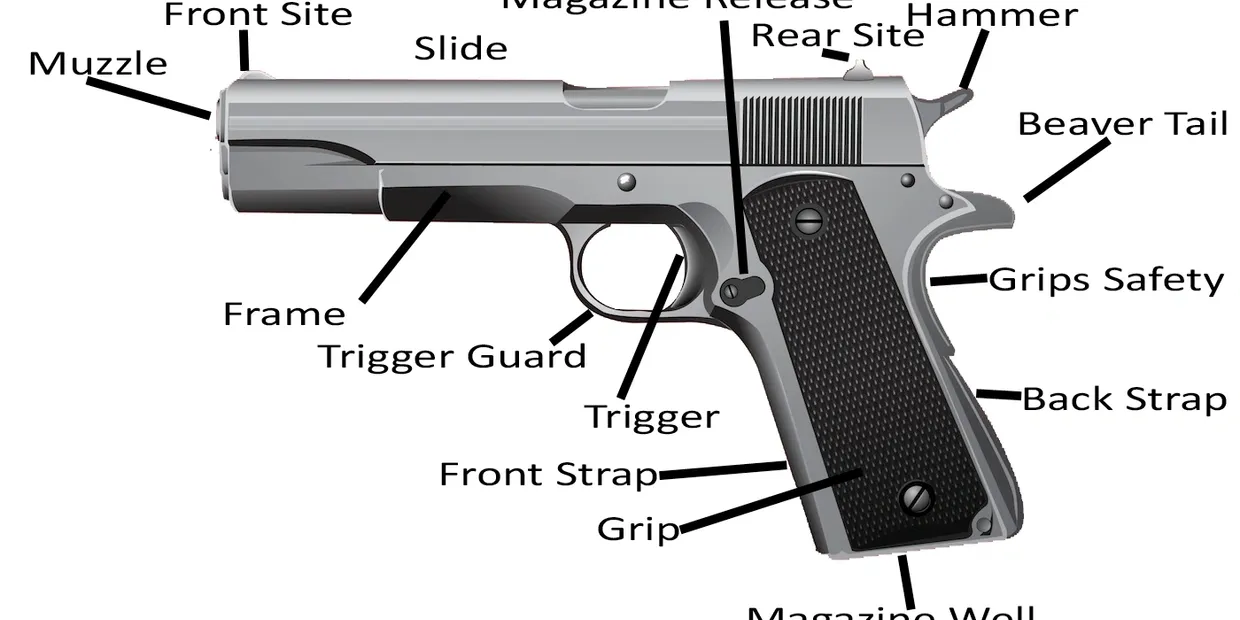
The trigger is the lever you pull to fire the gun. The trigger assembly includes the trigger itself, the trigger guard (a curved protective piece around it), and internal springs and sears that control firing.
The sear is a small internal part that holds the hammer or striker in place until you pull the trigger. When released, it allows the firing mechanism to function.
The Hammer and Firing Pin
The hammer is a heavy metal component that strikes the firing pin when the trigger is pulled. It’s primarily found in traditional revolvers and some pistols.
The firing pin is a small pointed rod that strikes the primer of a cartridge, igniting the powder inside. In striker-fired guns, a spring-loaded striker replaces the hammer and performs the same function.
The Magazine
The magazine holds ammunition and feeds rounds into the chamber one at a time. Magazines can be detachable (removable from the gun) or fixed (permanently attached).
Different magazine capacities exist depending on firearm type and local regulations. The magazine lips and springs must remain in good condition for reliable feeding.
The Slide and Bolt
On semiautomatic handguns, the slide is the moving top portion that cycles back and forth after each shot. It ejects spent casings and chambers new rounds automatically.
Rifles use a bolt instead—a metal rod that moves back and forth to load, fire, and eject ammunition. Bolt-action rifles require manual operation, while semiautomatic rifles cycle automatically.
The Stock
The stock is the rear portion of a rifle that you press against your shoulder when firing. It helps control recoil and improve accuracy by keeping the gun steady.
Modern tactical stocks are adjustable, allowing shooters to customize length of pull and angle for comfort and control. Shotguns also have stocks, which may be wood or synthetic.
Understanding Additional Gun Parts Names
Beyond the basics, several other components play important roles in firearm operation and safety.
The Safety Mechanism
The safety is a lever, button, or switch that prevents the gun from firing. Different firearms place safeties in different locations—thumb safeties on pistols, tang safeties on rifles, or cross-bolt safeties on shotguns.
Always verify the safety position before handling any firearm. A gun can only be considered safe when the safety is engaged and the chamber is clear.
The Grip
The grip is the handle you hold when operating the firearm. On pistols, grip texture, angle, and size vary significantly between models to accommodate different hand sizes.
Many modern grips are modular, allowing shooters to customize the feel and ergonomics. A comfortable grip improves control and reduces fatigue during extended shooting sessions.
The Frame
On handguns, the frame is the lower structural component that houses the trigger assembly and magazine well. The frame and slide must fit together precisely for proper function.
Revolver frames are called cylinders or frames and are constructed differently to accommodate rotating chambers instead of a magazine.
The Sights
Sights allow you to aim the firearm accurately. Most guns feature rear sights and front sights that you align to point at your target.
Iron sights are mechanical and don’t require batteries, while optical sights like scopes and red dot sights use lenses or electronic displays for enhanced aiming. Many modern firearms accept picatinny rails for mounting various sight systems.
The Ejector and Extractor
The extractor is a small claw that grips the rim of a spent cartridge case as the bolt or slide moves rearward. Without it, casings would jam inside the chamber.
The ejector is a spring-loaded piece that physically pushes the extracted casing out of the gun. Together, these ensure reliable clearing of fired ammunition.
Gun Parts Names for Specific Firearm Types
While many components are universal, certain firearm types have specialized gun parts names worth knowing.
Revolver-Specific Components
- Cylinder: The rotating drum holding multiple chambers for ammunition
- Cylinder Release: The lever that opens the cylinder for loading
- Crane: The hinge connecting the cylinder to the frame
- Yoke: Another term for the crane mechanism
- Cylinder Latch: The mechanism that holds the cylinder closed during firing
- Hammer: More prominent on revolvers than on many pistols
Rifle-Specific Components
- Handguard: The front portion of the stock you grip with your non-firing hand
- Gas Tube: Found on some semiautomatic rifles, it directs gas to cycle the action
- Charging Handle: A lever you pull to chamber a round and cock the firing mechanism
- Dust Cover: A hinged cover protecting the ejection port
- Forward Assist: A button that helps seat the bolt fully forward
Shotgun-Specific Components
- Choke: A removable or fixed constriction at the barrel’s muzzle that controls shot spread
- Pump or Slide: On pump-action shotguns, this fore-end cycles the action manually
- Chamber: The enlarged part of the barrel that holds a shotgun shell
- Barrel Selector: On some double-barrel shotguns, this switches between left and right barrels
Quick Facts About Firearm Components
Understanding quality materials matters—barrels are typically made from hardened steel or stainless steel, while other parts may use aluminum, polymer, or specialized alloys. Regular cleaning and maintenance of all gun parts names components extend firearm lifespan and ensure safe operation.
Aftermarket parts allow significant customization. Many shooters upgrade triggers, stocks, sights, and grips to match their preferences and needs. However, always ensure replacement parts are compatible with your specific firearm model.
For detailed technical information about your specific firearm, consult the manufacturer’s manual, which provides diagrams and explanations of every component. The manual is essential for proper maintenance and safe operation.
For more on firearm components and terminology, see Wikipedia’s Firearm article.
Also read Piercing Names: 180+ Unique Ideas for Your New Body Art.
Frequently Asked Questions
What is the most important gun part for safety?
The safety mechanism is critical, but equally important is responsible handling. Always keep the muzzle pointed in a safe direction and keep your finger off the trigger until you intend to fire.
Can I replace gun parts myself?
Many gun owners perform basic maintenance like cleaning and changing springs, but complex modifications should be done by qualified gunsmiths to ensure proper function and safety.
Why do different guns have different part names?
Firearms vary greatly in design—revolvers, bolt-action rifles, and semiautomatic pistols all operate differently, so their components have specialized names reflecting their unique functions and configurations.
What’s the difference between a slide and a bolt?
A slide is found on semiautomatic handguns and moves forward and backward; a bolt is a cylindrical rod in rifles that rotates and moves to chamber and eject rounds.
Learning gun parts names empowers you to understand how firearms function, communicate effectively with other shooters, and maintain your equipment safely and responsibly.